How to Choose a Refrigerator for a Small Kitchen

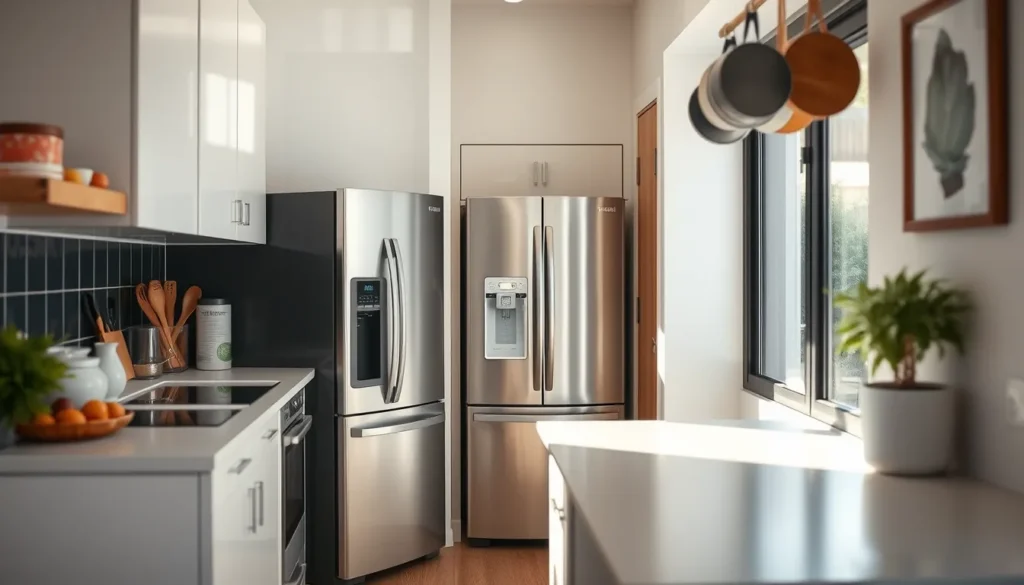
If you are renovating a compact apartment or working with a narrow alcove, standard refrigerator dimensions will likely not fit. This guide focuses on spatial efficiency and functional trade-offs, helping you avoid costly returns. You will learn how to accurately assess your kitchen’s layout constraints before considering brand features.
We prioritize measurement accuracy and layout compatibility. By understanding clearance requirements and door swing dynamics, you can select a model that integrates seamlessly without compromising workflow or storage capacity. This approach ensures the appliance serves your specific space rather than forcing you to adapt the room to the unit.
Measure the Space, Not Just the Opening
The cabinet opening is only part of the equation. The required installation space includes the physical footprint of the appliance plus the necessary ventilation gap. Most units need breathing room at the back and sides to prevent compressor overheating. Ignoring these ventilation gaps can lead to premature failure or inefficient operation. Measure the available width, height, and depth, ensuring you account for the full extent of the unit, including handles and hinges. A standard width measurement often misses the protruding door hardware, which can block adjacent cabinets or appliances.
Before selecting a model, map the path from the entrance to the final location. This route must accommodate the diagonal width of the refrigerator during transit. Tight hallways or narrow doorways often dictate the maximum size you can physically move into the room. Measure the narrowest point along this path. If the diagonal measurement of the chosen unit exceeds this clearance, you cannot install it, regardless of whether it fits the cabinet opening.
Consider the floor level and ceiling height. Some top-freezer or side-by-side models have fixed heights that may conflict with overhead cabinets. Verify that the door swing does not interfere with nearby counters or other appliance doors. Proper clearance ensures safe operation and easy access. By measuring the installation space rather than just the opening, you avoid the costly mistake of purchasing a unit that cannot be delivered or installed correctly. This precise approach guarantees the refrigerator integrates smoothly into your kitchen layout.
Selecting the Right Refrigerator Style for Tight Footprints
Choosing the right configuration involves balancing external dimensions with internal utility. Each style presents distinct trade-offs regarding width, depth, and workflow efficiency.
Top-freezer models are typically the most compact in width, making them ideal for narrow gaps. Their simple design often allows for tighter ventilation gaps, which is crucial when space is constrained. However, the smaller freezer compartment may limit bulk storage.
French door refrigerators offer superior interior organization with adjustable shelving and detailed compartments. While they provide excellent accessibility to the main refrigerated section, they generally require more depth. This extra projection can encroach on adjacent counter space, reducing usable work areas in compact kitchens.
Side-by-side units appear narrow due to their split-door design, but they are often too wide for many small kitchens. The total width usually exceeds the capacity of standard narrow spaces, forcing compromises in layout. Even if the unit fits physically, the narrow individual doors may restrict the size of items you can store inside, creating functional inefficiencies.
Evaluate your specific constraints before prioritizing features. If width is the primary limitation, a top-freezer is often the safest choice. If depth is manageable, a French door model might offer better storage organization. Avoid assuming that a narrower-looking profile translates to a smaller footprint; always verify the total width against your measured clearance. The goal is to select a style that maximizes usable storage without disrupting the natural flow of your kitchen.
Understanding Door Swing and Clearance Requirements
Choosing the right hinge position is just as critical as the unit’s dimensions. A refrigerator door does not simply open; it describes a wide arc that can easily collide with adjacent cabinetry, countertops, or walls. If the door swings outward into the primary walking path, you risk creating a bottleneck or damaging the finish on nearby surfaces. To avoid this, you must account for the full door swing, not just the static width of the appliance.
Before purchasing, verify that the door can open at least ninety degrees. This specific angle is necessary to access the outer shelves and door bins comfortably. If the door stops short of this threshold due to a wall or cabinet obstruction, you will find yourself constantly wrestling with the unit to retrieve items from the edges. In tight quarters, a restricted swing renders a significant portion of the storage space practically unusable.
To test this compatibility without moving furniture, use a simple visualization method. Place a sheet of cardboard on the floor and mark the exact pivot point of the hinge. Draw an arc representing the door’s radius. If this arc intersects with any fixed structures, the layout is incompatible. Alternatively, look for models with reversible doors. This feature allows you to mount the hinges on the opposite side, flipping the swing direction to fit around obstacles. By optimizing the hinge placement, you ensure the appliance integrates seamlessly into your kitchen flow while maintaining full access to all interior compartments. This proactive check prevents costly installation errors and ensures the refrigerator enhances, rather than hinders, your daily workflow.
Prioritizing Interior Layout Over Exterior Features
Once the exterior dimensions and door swing are confirmed, shift your focus inward. Storage efficiency in a compact refrigerator depends on how effectively the interior utilizes vertical space rather than just horizontal width. Since floor space is limited, maximizing the height of the fridge section is often more valuable than adding extra width. Look for models with multiple adjustable shelves that allow you to customize compartments for tall items like milk jugs or large water bottles. This flexibility prevents wasted gaps that occur with fixed shelving.
Door bins also play a critical role in spatial economy. Ensure they are deep enough for standard grocery containers but engineered to slide smoothly without obstructing shelf access. A common mistake is choosing a model with deep, fixed bins that make retrieving items from the middle sections difficult.
Freezer capacity deserves equal attention. In small kitchens, a dedicated, accessible freezer compartment is essential for meal planning. Avoid top-freezer units where the freezer is located high up, as this forces you to reach over the main compartment, creating awkward workflows. Instead, consider configurations where the freezer is at eye level or easily accessible.
Be cautious of external features that encroach on interior volume. Bulky water dispensers and complex external control panels often consume valuable cabinet space while reducing the usable area inside the fridge. These features add cost and complexity without significantly improving daily usability in a tight environment. Prioritize a simple, clean interior design that is easy to wipe down and sanitize. An easy-to-clean surface with fewer nooks and crannies makes maintenance faster and keeps the appliance hygienic with minimal effort.
Common Mistakes to Avoid When Buying for Small Spaces
A refrigerator that looks perfect in a showroom often fails in a real kitchen due to overlooked physical constraints. The most frequent error is ignoring the ventilation gap. Manufacturers require specific clearances behind and above the unit for heat dissipation. If you push the appliance flush against the wall to save space, you risk overheating the compressor, which shortens the unit’s lifespan and increases energy consumption. Always verify the required clearance in the manual before finalizing your layout.
Another critical oversight is underestimating the depth of handles. Exterior door handles can protrude several inches beyond the main cabinet face. If this protrusion is not accounted for, the door swing may be obstructed by adjacent cabinets or walls, making it impossible to open the doors fully. Measure the total width including the handles, not just the body of the appliance.
Do not assume that a standard height fits your ceiling. Some models, particularly those with integrated water dispensers or decorative grilles, are taller than standard. Similarly, width errors are common when shoppers ignore the exact specifications. A gap that appears sufficient in the store can be too narrow in your home if the wall is uneven or the existing cabinetry is slightly off-plumb.
Finally, never rely on visual estimation. Always read the technical specification sheet for exact dimensions, including all protrusions like kickplates, hinges, and control panels. If the spec sheet does not list the handle depth or required rear clearance, contact the manufacturer directly. A few minutes of verification prevents the frustration of returning a unit that physically cannot fit your space.
